How long before travel should I book vaccines? A week-by-week timeline
What you can still complete at 8 weeks, 4 weeks, 2 weeks and same-day — and what you cannot.
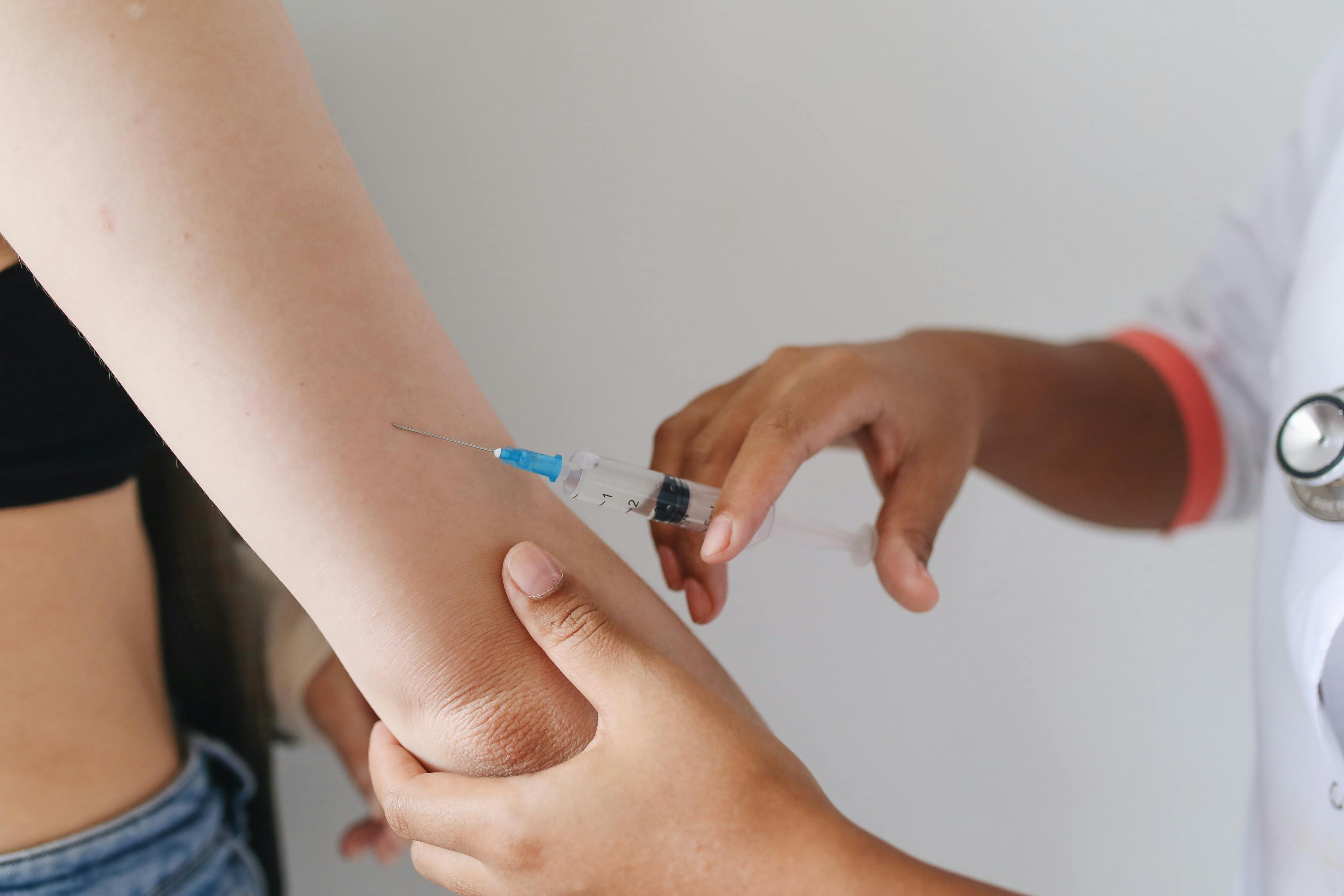
Travel vaccine timing, by the calendar
The single most common question we get at Trafford Clinic is some version of: how late is too late? The answer is rarely "too late" — it is usually "different things are possible at different points." Eight weeks out is the textbook ideal: every multi-dose schedule fits, including rabies (3 doses over 21–28 days), Hepatitis B (0/1/6 months) and Japanese Encephalitis (0/28 days). At four to six weeks, most schedules still finish in time, including Yellow Fever — which carries its own ten-day pre-arrival rule. At two weeks, single-dose vaccines like Typhim Vi and Hepatitis A still give meaningful protection. At one week, partial cover is better than nothing. Same-day slots are usually available at Empire Pharmacy with around two hours' notice. Haroon Iqbal MPharm, IP (GPhC 2051093) walks you through what is realistic for your trip date, rather than insisting on a textbook schedule that no longer fits the calendar in front of you.
The 8-weeks-out ideal
Eight weeks before departure is the textbook target — and the reason is simple: every multi-dose travel vaccine fits comfortably inside it. If you can plan that far ahead, do.
- Rabies pre-exposure — three doses on days 0, 7 and 21 or 28. The full course needs three to four weeks.
- Hepatitis B — standard schedule is doses on 0, 1 month and 6 months. Long-term protection benefits from the full six-month course, although accelerated schedules exist (see below).
- Japanese Encephalitis — two doses, 28 days apart. Recommended for longer rural-Asia trips and for Hajj-adjacent travel to wet-season South Asia.
- Combined Hepatitis A+B (Twinrix) — 0/1/6 if you have the time.
Booking at eight weeks also gives breathing room for prescribing decisions on malaria tablets and for arranging the Yellow Fever ICVP certificate if your destination requires it.
4–6 weeks out: still very workable
This is where most of our patients land, and the news is mostly good. Almost every vaccine you need can still be completed before you fly.
- Yellow Fever (Stamaril) — single dose. Immunity develops over 10 days, which is why the certificate is only considered valid from day 10. Four to six weeks gives plenty of margin.
- Accelerated Hepatitis B — Engerix B can be given on a 0/7/21-day schedule with a 12-month booster. Useful for shorter notice.
- Typhim Vi (typhoid) — single dose, works within 7–14 days. Strongly recommended for South Asia, including all of our India, Bangladesh and Pakistan travellers.
- Hepatitis A (Avaxim) — single dose gives multi-year cover and works within around two weeks.
- Boostrix-IPV — tetanus, diphtheria, polio, pertussis combined booster.
2 weeks out: still useful, more selective
Two weeks out the conversation narrows to single-dose vaccines and accelerated schedules. We focus on the things with the highest impact for your specific destination.
- Hepatitis A — single dose still gives partial protection by departure and full multi-year cover after a 6–12 month booster.
- Typhim Vi (typhoid) — useful for South Asia, parts of Africa, parts of Latin America.
- Menveo (ACWY) — required for Hajj and Umrah; see the Hajj 2026 vaccination guide for the certificate requirements.
- Boostrix-IPV — quick tetanus/polio top-up where needed.
- Malaria tablets — most regimens are started one to two days before entering a malarious area, so two weeks gives time to obtain and tolerate the chosen tablet.
The last week: partial cover beats no cover
Inside seven days, complete schedules are no longer realistic — but partial protection is. The honest framing matters here: a single dose of Hepatitis A vaccine given five days before departure does not give the same protection as a course completed six weeks ahead. It does give meaningfully better protection than nothing at all.
- Yellow Fever — the certificate is issued today, but the World Health Organization considers it valid from day 10. If your flight is in five days, the certificate is issued but you are not formally protected on landing. Most travellers still choose to be vaccinated rather than not.
- Single-dose vaccines — Typhim Vi, Hepatitis A, Boostrix-IPV, Menveo all still work.
- Malaria tablets — Malarone can be started one or two days before entering a malarious area; doxycycline needs a similar lead time; mefloquine ideally needs 2–3 weeks to allow side-effect screening.
Same-day and next-day
Same-day slots are usually available at Empire Pharmacy with around two hours' notice. Walk-ins are accommodated where possible. Same-day travel vaccines: what's possible when you've left it too late walks through exactly what can and cannot be done in that window. The summary: most single-dose vaccines are still possible, no multi-dose course can be completed, and the certificate-issuing process for Yellow Fever still runs.
The honest framing
Travel vaccines exist on a spectrum from "ideal" to "better than nothing." At eight weeks you get the ideal. At one week you get partial cover. Both are worthwhile. The mistake we see is travellers giving up on vaccination because the schedule is no longer perfect — when partial cover would still measurably reduce their risk.
Booking strategy by trip date
Trip 8+ weeks away
Book now. Two appointments is realistic: a first consultation with most jabs given, and a follow-up to complete multi-dose schedules. Build in margin for rabies and Hepatitis B.
Trip 4–6 weeks away
Book this week. Yellow Fever in particular should not slip beyond about 12 days before departure if you need the certificate to be unambiguously valid.
Trip 2 weeks away
Prioritise single-dose, high-impact vaccines for your destination. For South Asia that is usually Typhim Vi plus Hepatitis A. For Hajj it is the ACWY meningococcal. For Yellow Fever countries it is Stamaril.
Trip under 1 week away
Same-day appointment. Accept that protection will be partial. Bring your passport, itinerary, and any previous vaccine records you have.
Special groups
Child travellers have minimum-age restrictions on several vaccines, which compress your timeline further. Pregnant travellers need a more nuanced discussion. Older travellers considering Yellow Fever should read the over-60 risk-benefit guide before booking.
Where to come
Trafford Clinic operates from Empire Pharmacy (GPhC premises 1123966) at 122 Seymour Grove, Old Trafford. Public transport from across Greater Manchester is straightforward. Local-area pages include Manchester, Sale, Altrincham, Stretford, Chorlton and Rusholme. Destination guides — Thailand, Bali and the rest — explain the specific vaccines we would discuss for each country.
If you are unsure where your trip falls on this timeline, call 0161 258 6149 or book via our booking page and we will work backwards from your flight date.
Key points from this guide.
Quick summary before you read the detail.
8 weeks is the ideal
4–6 weeks still works
2 weeks is selective
1 week gives partial cover
Yellow Fever has 10-day rule
Boosters can wait
What to do next.
Three steps after reading.
Tell us your flight date
Prioritise by destination risk
Book the return appointment
About this guide.
Walk-in welcome Monday to Saturday. Same-day bookings available most of the time.
- Mon09:00 – 19:00
- Tue09:00 – 19:00
- Wed09:00 – 19:00
- Thu09:00 – 19:00
- Fri09:00 – 19:00
- Sat09:00 – 17:00
- SunClosed
Related questions
If your question isn't here, give us a call and we'll talk it through.
References for this page
Every clinical claim above is sourced from an authoritative public reference.
- 01
- 02
- 03
- 04
- 05
Information on this page is general guidance from Trafford Clinic, operated by Empire Pharmacy (GPhC premises 1123966). It is not a substitute for individual clinical assessment.