Pregnancy and travel vaccines: what's safe, what's contraindicated
The clear rules on which vaccines you can have, which you cannot, and how to weigh up Yellow Fever risk-versus-benefit during pregnancy.
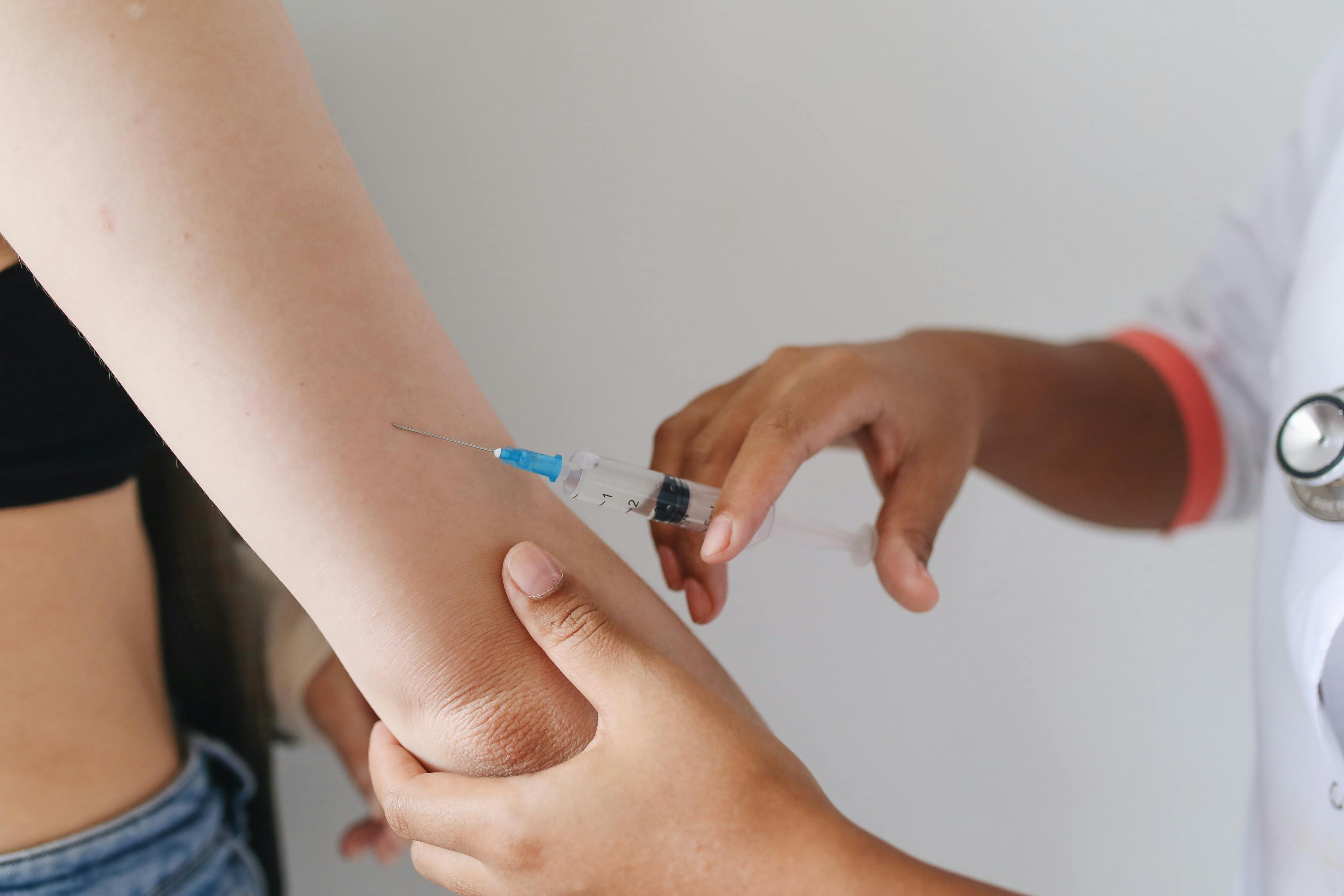
Travel vaccines in pregnancy, the honest rules
Pregnancy changes the calculus for almost every travel decision. Most inactivated vaccines remain safe, live attenuated vaccines are generally avoided, and a small number of vaccines fall into a careful risk-benefit category. There is also the bigger question of whether to travel at all — Zika risk, malaria risk and access to maternity care abroad all matter. This guide, written by pharmacist Haroon Iqbal MPharm, IP (GPhC reg. 2051093), explains the rules vaccine by vaccine, summarises which malaria tablets are safe in pregnancy, and gives the destinations we recommend avoiding. Trafford Clinic, operated by Empire Pharmacy (GPhC premises 1123966), runs a dedicated travel clinic at our Old Trafford pharmacy and refers high-risk pregnancies to obstetric medicine where appropriate.
The general principle
The framework, taken from UKHSA Green Book chapter 6 and NaTHNaC guidance, is straightforward:
- Live attenuated vaccines are avoided in pregnancy because of a theoretical (rarely observed) risk of fetal infection. The list: Yellow Fever, MMR, varicella, oral Vivotif typhoid, BCG, oral polio (now replaced by inactivated polio everywhere).
- Inactivated vaccines are generally considered safe in pregnancy. The theoretical risk is essentially zero because there is no replicating virus.
- Routine UK vaccines in pregnancy — pertussis (Boostrix-IPV) in the third trimester from 16 weeks, and influenza in any trimester during the season — are positively recommended because they protect the newborn.
Decisions are made on a risk-benefit basis: the risk of the disease (likelihood and severity) versus the theoretical risk of the vaccine. For most live vaccines, the disease risk has to be substantial before vaccination is considered.
Live vaccines to avoid
The following are normally contraindicated in pregnancy:
- Yellow Fever (Stamaril) — the most common dilemma. Avoided where possible; given only where YF disease risk clearly outweighs vaccine risk. See the next section.
- MMR — avoid in pregnancy; women planning pregnancy should ensure MMR status before conception (live vaccine, 4-week pre-conception interval recommended).
- Varicella (chickenpox) — avoid in pregnancy.
- Oral typhoid Vivotif (Ty21a) — live attenuated; use injectable Typhim Vi instead.
- BCG — avoid in pregnancy.
- Smallpox / monkeypox — avoided unless high-risk exposure.
When Yellow Fever is given anyway
Stamaril is the only Yellow Fever vaccine. The trial data on pregnancy outcomes is reassuring but not definitive. The decision is documented:
- Can the trip be deferred or rerouted to avoid YF zones?
- Is the country a mandatory ICVP country? An exemption letter may be acceptable for travellers with a clear contraindication.
- If exposure to wild YF is genuinely likely (rural travel, jungle exposure, prolonged stay during transmission season), the vaccine is given with explicit informed consent.
The Stamaril SmPC and the UKHSA Green Book chapter 35 both support this framework. We document the consent discussion, including the residual theoretical risk to the fetus, and report any pregnancy exposure to the manufacturer's pregnancy registry.
Inactivated vaccines generally safe
The following are routinely offered when indicated in pregnancy:
- Hepatitis A — Havrix, Avaxim, VAQTA. Safe.
- Hepatitis B — Engerix B, HBvaxPro. Safe. See our guide on hepatitis B vaccine.
- Inactivated typhoid (Typhim Vi) — safe in pregnancy.
- Inactivated polio (IPV) — safe.
- Meningococcal ACWY (Menveo, Nimenrix) — safe.
- Japanese encephalitis (Ixiaro) — limited data but considered safe where exposure risk is high.
- Killed cholera (Dukoral) — safe.
- Rabies pre-exposure — Rabipur, Rabies BP. Safe in pregnancy when indicated by travel risk.
- Tick-borne encephalitis — safe where indicated.
- Tetanus, diphtheria, pertussis (Boostrix-IPV) — routinely given in 3rd trimester to protect the newborn from whooping cough.
For more on pertussis vaccination, see our whooping cough vaccine page.
Pertussis in the third trimester
Boostrix-IPV is offered to all pregnant women from 16 weeks (ideally 16–32 weeks). The maternal antibody response crosses the placenta and protects the newborn before they can complete their own pertussis schedule. UK uptake is good but not universal; for travelling women, this is the one vaccine we will actively recommend if it has not been given.
Zika destinations to avoid
Zika virus causes severe fetal abnormalities including microcephaly. Areas with current or historical Zika transmission include much of Latin America and the Caribbean, parts of sub-Saharan Africa, parts of South and Southeast Asia, and Pacific island nations. The CDC and NaTHNaC maintain live country lists. Pregnancy is a clear reason to defer travel to high-risk areas. If travel is essential, intensive mosquito-bite avoidance is required, and screening blood tests may be offered on return.
Malaria chemoprophylaxis in pregnancy
Malaria in pregnancy is severe — high risk of maternal anaemia, pregnancy loss, stillbirth and prematurity. Prevention matters and chemoprophylaxis is preferred to risking the disease. The options:
- Chloroquine + proguanil — safe in pregnancy. Now only effective in a small number of destinations due to widespread chloroquine resistance.
- Mefloquine (Lariam) — historically avoided in 1st trimester; recent guidance allows it in 2nd and 3rd trimesters, and increasingly in 1st trimester when alternatives are not suitable.
- Malarone (atovaquone-proguanil) — limited pregnancy data; usually avoided in pregnancy unless no alternative.
- Doxycycline — contraindicated in pregnancy (effects on fetal teeth and bones).
For non-pregnant comparison of these tablets, see malaria tablets compared. Where chemoprophylaxis is not appropriate, we strongly advise rerouting to avoid malaria zones.
Breastfeeding considerations
Most travel vaccines are safe during breastfeeding. Live vaccines including MMR, varicella and Yellow Fever can be given to breastfeeding mothers in most circumstances, with the exception of Yellow Fever for infants under 9 months — there is a small risk of transmission of vaccine virus via breastmilk. Where Yellow Fever is needed in a breastfeeding mother with an infant under 9 months, we discuss expressing and discarding milk for 2 weeks, or deferring the trip.
Practical planning at Trafford Clinic
Bring your maternity notes to the appointment. Haroon takes a focused history including gestational age, obstetric history, current medications, and details of the trip. Where Yellow Fever or other live vaccines are under discussion, we document the risk-benefit conversation in detail. We coordinate routine pregnancy vaccinations (pertussis, flu) alongside travel needs.
Book at our Manchester travel clinic, or our local pages including Sale and Altrincham. Country-specific advice is available for India and Thailand. Travelling families should also see our child travel vaccines guide, and where the destination is YF-endemic, the ICVP guide.
Key points from this guide.
Quick summary before you read the detail.
Inactivated vaccines are safe
Live vaccines usually avoided
Yellow Fever needs documented consent
Pertussis from 16 weeks
Zika changes the trip
Malaria options narrow
What to do next.
Three steps after reading.
Bring maternity notes
Defer or reroute if possible
Stack pertussis and flu
About this guide.
Walk-in welcome Monday to Saturday. Same-day bookings available most of the time.
- Mon09:00 – 19:00
- Tue09:00 – 19:00
- Wed09:00 – 19:00
- Thu09:00 – 19:00
- Fri09:00 – 19:00
- Sat09:00 – 17:00
- SunClosed
Related questions
If your question isn't here, give us a call and we'll talk it through.
References for this page
Every clinical claim above is sourced from an authoritative public reference.
- 01
- 02
- 03
- 04
- 05
Information on this page is general guidance from Trafford Clinic, operated by Empire Pharmacy (GPhC premises 1123966). It is not a substitute for individual clinical assessment.