Thyroid panel explained: TSH, T3, T4, and antibodies
Plain-English walk-through of every component of a comprehensive thyroid panel and what the values mean for you.
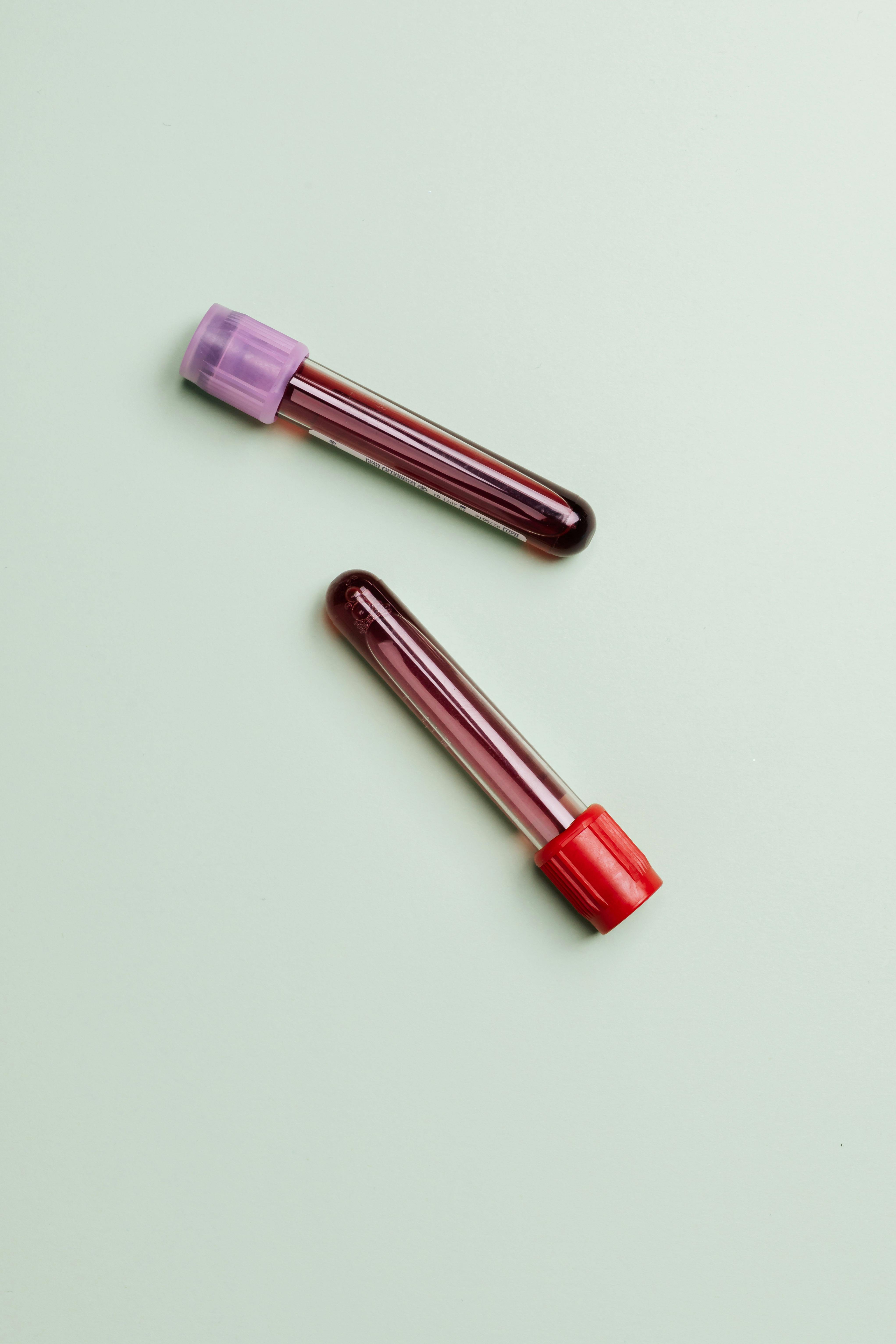
Understanding your thyroid results
Thyroid testing is one of the most commonly ordered blood panels in the UK and one of the most frequently misunderstood. A single TSH value is enough for routine screening, but symptom-based workup of fatigue, weight change, low mood, palpitations or fertility issues warrants the full panel: TSH, free T4, free T3, TPO antibodies and (in selected cases) TRAb. This guide, written by pharmacist Haroon Iqbal MPharm, IP (GPhC reg. 2051093) at Trafford Clinic, operated by Empire Pharmacy (GPhC premises 1123966), explains what each marker actually measures, how the values fit together, and how the interpretation changes for women in pregnancy, on HRT, or planning fertility.
TSH: the master switch
Thyroid-stimulating hormone (TSH) is produced by the pituitary gland in the brain. It tells the thyroid gland (a butterfly-shaped gland in the front of the neck) how much hormone to release.
- High TSH means the pituitary is shouting at an underactive thyroid — hypothyroidism. Symptoms: tiredness, weight gain, cold intolerance, dry skin, hair loss, constipation, slowed thinking.
- Low TSH means the pituitary is staying quiet because the thyroid is already producing too much — hyperthyroidism. Symptoms: weight loss despite normal appetite, palpitations, anxiety, tremor, heat intolerance, eye changes.
- Normal TSH in the reference range (typically 0.4–4.0 mIU/L; some labs use 0.27–4.2). Indicates the feedback loop is intact.
TSH is the most sensitive single marker of thyroid status because small changes in thyroid hormones produce large changes in TSH. For initial screening, TSH alone is usually enough.
Free T4: the storage hormone
Thyroxine (T4) is the main hormone the thyroid produces. About 99.97% is bound to proteins in the blood. The remaining 0.03% — the free T4 — is the biologically available fraction.
Why we measure free T4 rather than total T4:
- Total T4 changes when binding-protein levels change. Pregnancy, oestrogen-containing contraceptives and liver disease all raise binding proteins and total T4 — without the patient actually being hyperthyroid.
- Free T4 reflects what the tissues actually have available.
Typical reference range: 12–22 pmol/L. Low free T4 in the context of high TSH confirms primary hypothyroidism. Normal free T4 with high TSH is subclinical hypothyroidism.
Free T3: the active hormone
Triiodothyronine (T3) is the more biologically active hormone. Most circulating T3 is produced not by the thyroid but by conversion of T4 to T3 by deiodinase enzymes in tissues (mostly liver, kidney, muscle).
Typical reference range: 3.1–6.8 pmol/L (free T3).
When free T3 matters most:
- Confirming hyperthyroidism when TSH is suppressed but free T4 is borderline.
- Investigating T3 toxicosis (where free T3 is elevated but free T4 is normal).
- In some patients on levothyroxine who feel poorly despite normal TSH/T4 — the conversion to T3 may be inadequate (a contested clinical area).
Total vs free — why "free" is preferred
The summary, again:
- Total T4 and total T3 measure both bound and free hormone. They change with binding-protein levels.
- Free T4 and free T3 measure only the biologically available fraction. They are insensitive to binding-protein changes.
For all routine work, free T4 and free T3 are preferred. Total measurements are now rarely used.
TPO antibodies: diagnosing Hashimoto's
Anti-thyroid peroxidase (TPO) antibodies attack the enzyme that helps make thyroid hormones. They are diagnostic of Hashimoto's thyroiditis, the most common cause of hypothyroidism in iodine-replete countries (including the UK).
- Present in >90% of patients with Hashimoto's.
- Often present years before TSH rises — the thyroid gland gradually fails over time.
- Positive TPO with a high-normal TSH (3.5–4.0 mIU/L) is a predictor of future overt hypothyroidism.
- Also positive in some patients with Graves' disease (autoimmune hyperthyroidism).
We routinely include TPO antibodies in panels for women planning fertility, postpartum thyroid evaluation, family history of autoimmune thyroid disease, and patients with vague symptoms whose TSH is borderline. See hormone panels for women for fertility-related testing.
TRAb: diagnosing Graves' disease
TSH-receptor antibodies (TRAb, sometimes split into TSI — thyroid-stimulating immunoglobulins) bind to and activate the TSH receptor on the thyroid gland, driving hyperthyroidism. They are diagnostic of Graves' disease.
- Positive in >95% of patients with active Graves' disease.
- Measured when initial tests show hyperthyroidism (suppressed TSH, raised free T4 and/or T3).
- Also used in pregnancy planning for women with Graves' history, because high TRAb can cross the placenta and cause neonatal hyperthyroidism.
Thyroglobulin antibodies
Anti-thyroglobulin antibodies are a less specific marker. They are positive in some Hashimoto's patients and in some healthy individuals. Their main clinical role today is monitoring patients post-thyroidectomy for thyroid cancer recurrence.
What the reference ranges mean
A laboratory reference range is the 95% interval of a defined healthy population. By definition, 2.5% of healthy people have a value below the lower limit and 2.5% above the upper limit. A value just outside the range is not automatically pathological.
Conversely, the so-called "high-normal" TSH (3.5–5.0 mIU/L in many UK labs) is associated with future hypothyroidism risk in patients with positive TPO antibodies. "Normal" is not always "optimal" for an individual. See reading blood test results in plain English for more on this.
When to test what
- Initial screen in a well person: TSH alone is enough.
- Initial workup of symptoms consistent with thyroid dysfunction: TSH + free T4. Add free T3 if hyperthyroidism is suspected.
- Persistent symptoms with normal TSH: full panel — TSH, free T4, free T3, TPO antibodies. This is where private testing often adds value because the NHS rarely tests antibodies pre-emptively.
- Family history of autoimmune thyroid or fertility planning: full panel including TPO.
- Suspected hyperthyroidism: TSH + free T4 + free T3 + TRAb.
- Postpartum: TSH + free T4 ± TPO 6–9 weeks post-delivery for women with thyroid history or symptoms; postpartum thyroiditis affects 5–10% of women.
Pregnancy considerations
The TSH target in pregnancy is lower than in non-pregnant women, reflecting the increased thyroid hormone demand of pregnancy:
- First trimester: TSH 0.1–2.5 mIU/L (or below trimester-specific upper limit).
- Second/third trimesters: TSH 0.2–3.0 mIU/L.
Women on levothyroxine usually need a 20–30% dose increase in early pregnancy. Untreated overt hypothyroidism in pregnancy carries risk of miscarriage, preterm labour and impaired neonatal neurodevelopment.
Subclinical vs overt
- Overt hypothyroidism: TSH high and free T4 low. Treatment indicated.
- Subclinical hypothyroidism: TSH high, free T4 normal. Treatment decisions depend on TSH level, symptoms, antibodies, and patient context (pregnancy planning, cardiovascular risk).
- Overt hyperthyroidism: TSH low, free T4 and/or T3 high. Treatment indicated.
- Subclinical hyperthyroidism: TSH low, free T4 and T3 normal. Monitor and investigate cause.
Booking your panel
For thyroid testing we recommend morning sampling (TSH has a diurnal rhythm and is slightly higher in the morning), fasted is preferable but not essential, and — if you are on levothyroxine — take the tablet after the blood draw, not before. We will explain at booking.
See our brand blood tests page, the related private vs NHS guide, the pre-Mounjaro baseline panel, and our local Manchester, Sale, Altrincham, Chorlton and Old Trafford pages. If you have B12 symptoms alongside thyroid concerns, see pernicious anaemia — the two autoimmune conditions cluster.
Key points from this guide.
Quick summary before you read the detail.
TSH is the master switch
Free T4 over total T4
Free T3 catches edge cases
TPO antibodies diagnose Hashimoto's
TRAb confirms Graves'
Pregnancy needs lower TSH
What to do next.
Three steps after reading.
Match panel to question
Time the draw correctly
Review with a pharmacist
About this guide.
Walk-in welcome Monday to Saturday. Same-day bookings available most of the time.
- Mon09:00 – 19:00
- Tue09:00 – 19:00
- Wed09:00 – 19:00
- Thu09:00 – 19:00
- Fri09:00 – 19:00
- Sat09:00 – 17:00
- SunClosed
Related questions
If your question isn't here, give us a call and we'll talk it through.
References for this page
Every clinical claim above is sourced from an authoritative public reference.
- 01
- 02
- 03
- 04
- 05
Information on this page is general guidance from Trafford Clinic, operated by Empire Pharmacy (GPhC premises 1123966). It is not a substitute for individual clinical assessment.