Hormone panels for women: when to test what (cycle day matters)
FSH, LH, oestradiol, progesterone, AMH, testosterone — each has the right cycle day. Here is the timing map.
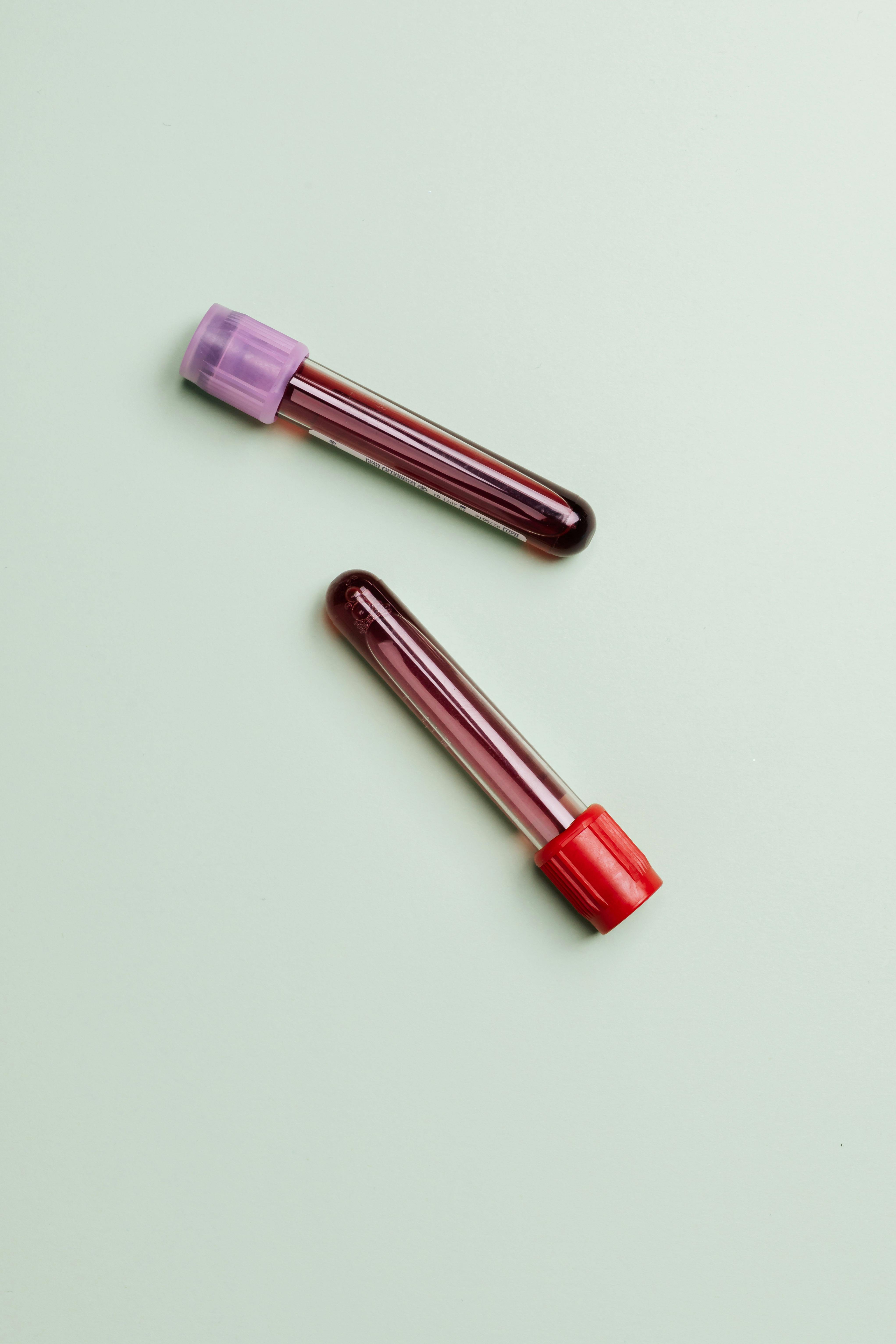
Cycle-aware hormone testing
Female hormones fluctuate dramatically through the menstrual cycle. The same blood drawn on day 3 of the cycle and day 21 of the same cycle looks like results from two different people. This is the single biggest source of confusion in hormone testing — patients (and sometimes clinicians) compare values against generic reference ranges without anchoring to the cycle day. This guide, written by pharmacist Haroon Iqbal MPharm, IP (GPhC reg. 2051093) at Trafford Clinic, operated by Empire Pharmacy (GPhC premises 1123966), explains which hormones need which cycle day, the standard panels for different clinical questions (fertility, PCOS, perimenopause, androgen excess), and the practical logistics of booking a panel that gets you usable answers.
Why cycle timing matters
A normal 28-day menstrual cycle has four phases:
- Early follicular (days 1–5). Day 1 is the first day of bleeding. Oestradiol and progesterone are at baseline. FSH rises modestly. The next egg's follicle is being selected.
- Late follicular (days 6–12). FSH falls slightly; oestradiol rises as the dominant follicle matures.
- Ovulation (around day 14 in a 28-day cycle). LH surges, oestradiol peaks then falls, ovulation occurs.
- Luteal (days 14–28). The empty follicle becomes the corpus luteum and produces progesterone, which peaks around day 21–23 in a 28-day cycle.
For shorter or longer cycles, the principle is the same but the day numbers shift. The luteal phase is fairly fixed at 14 days; the follicular phase varies.
Day 3 panel (early follicular)
The standard day 3 panel includes:
- FSH (follicle-stimulating hormone). Baseline gives a measure of ovarian reserve. High FSH (>10–12 IU/L) on day 3 suggests reduced ovarian reserve.
- LH (luteinising hormone). Useful in combination with FSH. A high LH:FSH ratio is suggestive of PCOS.
- Oestradiol (E2). Day 3 oestradiol gives baseline. Elevated day 3 oestradiol can falsely lower the FSH reading and mask poor ovarian reserve.
- Prolactin. Not strictly cycle-dependent but conveniently checked on day 3. High prolactin can suppress ovulation and cause infertility.
- AMH (anti-Mullerian hormone). Can be measured any day but conveniently bundled here.
Use cases: fertility workup, ovarian reserve assessment, PCOS workup.
Day 21 panel (mid-luteal)
The day 21 panel is dominated by one marker:
- Progesterone. The single most useful test to confirm ovulation. A progesterone >30 nmol/L (10 ng/mL in some labs) on day 21 of a 28-day cycle indicates ovulation occurred.
For longer cycles, time the test 7 days before expected next period rather than rigidly on day 21. For irregular cycles, day 21 timing may need to be revisited.
Use cases: confirming ovulation, working up secondary infertility, evaluating luteal phase deficiency.
AMH — measurable any day
Anti-Mullerian hormone is produced by small ovarian follicles. It is one of the few reproductive hormones that does not vary significantly through the cycle, so it can be measured any day. AMH gives a strong marker of ovarian reserve:
- Very low AMH (<5 pmol/L): low ovarian reserve, fertility implications.
- Normal AMH (5–40 pmol/L for women aged 25–40): expected range.
- Very high AMH (>40 pmol/L): often seen in PCOS (multiple small follicles producing AMH).
AMH declines with age and is the most useful single marker for fertility planning. Two important caveats: AMH does not tell you whether you will conceive (it does not measure egg quality, just quantity), and AMH can be transiently lowered by combined oral contraceptive pills.
Testosterone — morning, fasting, day-3 ideally
Testosterone has a diurnal rhythm — highest at 7–9am and falling through the day. It also varies modestly through the cycle. For consistency, we sample at 7–9am, fasting, ideally on cycle day 3 or early follicular phase.
Use cases:
- PCOS workup — elevated free testosterone or free androgen index points to androgen excess.
- Androgenic symptoms (hirsutism, acne, scalp hair loss).
- Low libido investigation in women (testosterone is one factor of several).
Sex hormone-binding globulin (SHBG) is measured alongside; the free androgen index is calculated from total testosterone and SHBG.
Cortisol — early morning fasting
Cortisol follows a diurnal rhythm with a sharp morning peak. Standard timing is 7–9am, fasting. Low morning cortisol may indicate adrenal insufficiency (Addison's disease, secondary causes); high morning cortisol may indicate Cushing's. Not strictly part of routine female hormone panels but added when adrenal involvement is suspected.
Thyroid alongside
Always include TSH and free T4 in a fertility or perimenopause panel. Thyroid dysfunction is a common cause of menstrual irregularity, anovulation and unexplained subfertility. See thyroid panel explained. For women with positive TPO antibodies, postpartum thyroiditis risk is significantly elevated.
Perimenopause / menopause panel
Perimenopause is biologically a period of fluctuating, declining ovarian function. The complication is that the fluctuation is large — a single FSH reading can be misleading. The pattern:
- Early perimenopause: FSH and oestradiol fluctuate widely. A single normal-range result does not rule out perimenopause.
- Established perimenopause: FSH rises towards 25–40 IU/L and oestradiol falls. Cycles become irregular.
- Menopause: FSH typically >30 IU/L sustained, oestradiol consistently low, no period for 12 months.
For women with menopausal symptoms in their late 40s or 50s with classical symptoms, NICE guidance is that diagnosis is clinical — blood tests do not change the diagnosis. We test selectively when:
- Symptoms in women under 45.
- Symptoms in women on hormonal contraception (where cycle is masked).
- Unclear picture with atypical symptoms.
- HRT monitoring.
See our brand blood tests page for the full menu.
PCOS workup
PCOS diagnosis (Rotterdam criteria) requires 2 of 3:
- Oligo-ovulation or anovulation.
- Clinical or biochemical hyperandrogenism.
- Polycystic ovaries on ultrasound.
Blood tests support the diagnosis:
- Total testosterone, SHBG, free androgen index.
- FSH, LH, oestradiol (day 3 if possible).
- AMH (often elevated in PCOS).
- TSH (rule out thyroid).
- Prolactin (rule out prolactinoma).
- 17-OH-progesterone (rule out non-classical congenital adrenal hyperplasia).
- Often a 2-hour oral glucose tolerance test (OGTT) for insulin resistance.
Postpartum and breastfeeding
The hormone environment in pregnancy and the postpartum period is unlike any other state. Routine cycle-day reference ranges do not apply. We typically defer hormone testing until 6–12 weeks after stopping breastfeeding for reliable results, unless there is a specific clinical concern.
Practical booking
To book a cycle-day-specific panel:
- Know day 1 of your cycle (first day of bleeding).
- Count forwards. Day 3 = the second day after day 1.
- Day 21 panels = roughly 7 days before your expected next period.
- Book ~24–48 hours of flexibility around the target day.
- If your cycle is irregular, we may use a different anchor (luteinising hormone surge, basal body temperature, ovulation prediction kits).
We hold slots at our locations specifically for hormone-timing patients — Manchester, Sale and Altrincham are particularly busy with perimenopause workup; Chorlton and Old Trafford see most fertility planning.
For interpretation guidance see reading blood test results in plain English. For pre-Mounjaro context see pre-Mounjaro baseline blood panel. For how this fits with NHS testing see private blood tests vs NHS.
Key points from this guide.
Quick summary before you read the detail.
Day 3 panel for reserve
Day 21 confirms ovulation
AMH any day
Testosterone in the morning
PCOS needs the full panel
Single perimenopause result is misleading
What to do next.
Three steps after reading.
Pick the right cycle day
Book with timing flexibility
Review results with us
About this guide.
Walk-in welcome Monday to Saturday. Same-day bookings available most of the time.
- Mon09:00 – 19:00
- Tue09:00 – 19:00
- Wed09:00 – 19:00
- Thu09:00 – 19:00
- Fri09:00 – 19:00
- Sat09:00 – 17:00
- SunClosed
Related questions
If your question isn't here, give us a call and we'll talk it through.
References for this page
Every clinical claim above is sourced from an authoritative public reference.
- 01
- 02
- 03
- 04
- 05
Information on this page is general guidance from Trafford Clinic, operated by Empire Pharmacy (GPhC premises 1123966). It is not a substitute for individual clinical assessment.