Why your NHS Tier 3 weight management referral might take 18 months — and what your options are
Tier 3 in Greater Manchester is the gateway to NHS GLP-1 medication. The wait is real, the alternative is honest — here is the trade-off.
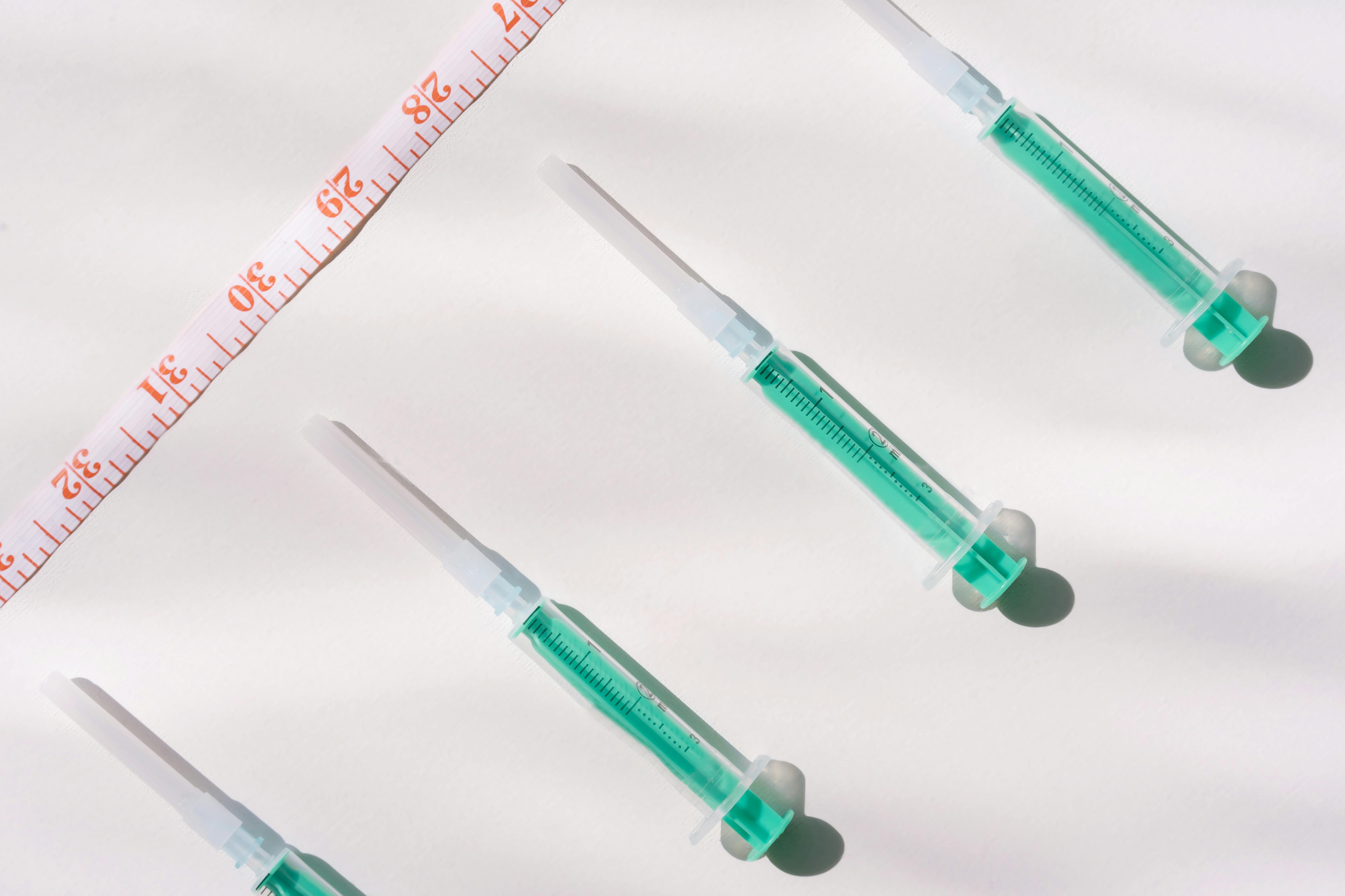
Tier 3, NHS waits and what you can actually do
If you have asked your GP about Mounjaro or Wegovy on the NHS, the answer involves the phrase "Tier 3 weight management service". Tier 3 is the gateway: the specialist multidisciplinary service where eligible patients can start NICE-approved weight loss medication. The problem is the queue. In Greater Manchester the wait between a successful Tier 3 referral and a first appointment runs typically 12 to 24 months. This guide explains what Tier 3 is, why the wait is so long, what it means for you clinically, and the honest trade-offs between staying on the NHS list and starting a private route. Written by pharmacist Haroon Iqbal MPharm, IP (GPhC reg. 2051093), this guide reflects the experience of patients we see week to week at Trafford Clinic, operated by Empire Pharmacy (GPhC premises 1123966).
What Tier 3 is
The NHS weight management pathway is structured in four tiers. Tier 1 is universal lifestyle advice. Tier 2 is community-based behavioural and dietetic services (gyms-on-prescription, group programmes). Tier 3 is the specialist multidisciplinary service — a hospital-based or community-specialist clinic where a consultant, dietitian, psychologist and sometimes endocrinologist or hepatologist work with patients on more complex obesity. Tier 4 is bariatric surgery.
The reason Tier 3 matters for Mounjaro and Wegovy is the NICE technology appraisal pathway. NICE TA875 (Wegovy) and TA1026 (Mounjaro for weight loss) restrict NHS prescribing to specialist weight management services. Tier 3 is the only NHS setting in which these medications can be initiated for weight loss. GPs cannot prescribe them for weight loss outside of a Tier 3 (or in some areas Tier 2-plus) pathway.
How a Tier 3 referral works
The route is GP → Tier 3. Your GP refers you if you meet the NICE BMI thresholds:
- BMI ≥35 with one or more weight-related comorbidity (type 2 diabetes, hypertension, obstructive sleep apnoea, dyslipidaemia, cardiovascular disease, osteoarthritis affecting daily life).
- BMI ≥30 with risk-equivalent comorbidities for some pathways.
- Lower thresholds (by 2.5) for people of South Asian, Chinese, other Asian, Middle Eastern, Black African or African-Caribbean family background — see our guide on ethnic BMI thresholds in NICE CG189.
The GP completes a referral form documenting BMI, comorbidities, prior weight loss attempts and your readiness to engage. The referral is triaged by the Tier 3 team. You will receive a letter acknowledging the referral. Then — you wait.
Why the wait is 12 to 24 months
Greater Manchester has roughly 2.8 million residents. Conservatively, 600,000 adults meet the BMI threshold for Tier 3 consideration. Tier 3 services across the ten boroughs collectively see a small fraction of that number per year. The mathematics of supply and demand is unforgiving. The pressure has intensified since the 2023–24 NICE approvals expanded eligibility, and since public awareness of GLP-1 drugs surged.
The wait is not arbitrary. Tier 3 services are commissioned and funded by the local integrated care board (ICB), and the budget envelope determines headcount, which determines slot availability. Across most of England, GP referral-to-first-appointment times of 12–18 months are now standard, and 24 months is not unusual in higher-demand areas.
What happens while you wait
Two things matter clinically:
- Weight progression. The natural history of untreated obesity is gradual weight gain. A patient waiting 18 months may put on 3–10 kg in that period, which then becomes the starting point for treatment.
- Cardiometabolic risk accumulates. Hypertension worsens, glucose tolerance drifts, cholesterol creeps up, sleep apnoea progresses. The period of waiting is not biologically neutral.
If you have type 2 diabetes, there is a separate NHS pathway (Mounjaro for T2D under NICE TA924) which can be accessed through your GP without going via Tier 3. See our guide on Mounjaro for diabetes vs weight loss.
The private route
The same medications — the same Mounjaro pens, the same Wegovy pens, manufactured to the same MHRA-licensed specification — are available privately from pharmacist-led clinics. Eligibility broadly mirrors NICE (BMI thresholds and risk factors) but is set by the prescribing clinician rather than the ICB. There is no waiting list. We see patients within days at Trafford Clinic.
The pros of private:
- Start within days, not months or years.
- Continuous one-to-one pharmacist-led care.
- Direct access to your prescriber for dose adjustments and side-effect management.
- You retain the option to transfer back to NHS Tier 3 when your slot becomes available.
The honest cons:
- Out-of-pocket cost. We will not quote a number on this page — see our pricing page for the live figure.
- You miss the multidisciplinary input — psychology, dietetics and endocrinology — unless we refer you privately.
- Long-term continuity — if you stop paying, you stop the medication, with the rebound risk explained in what happens when you stop Mounjaro.
Honest trade-offs
This is not a binary decision. Many patients we see in Greater Manchester adopt a hybrid strategy: start privately to take advantage of the clinical benefit now, and let the NHS Tier 3 referral mature in the background. When the Tier 3 slot becomes available 18 months later, they decide based on what their progress and finances look like.
The argument for staying patient and waiting:
- Cost — NHS treatment is free at the point of use.
- Multidisciplinary input — psychology, dietetics, sometimes hepatology and endocrinology.
- Long-term integration — your GP records, your prescriptions, your follow-up are all in one place.
The argument for starting now:
- Time. 18 months is a long time during which to gain weight and accumulate cardiometabolic risk.
- Clinical effectiveness. Mounjaro and Wegovy have substantial weight loss effects — see Mounjaro vs Wegovy.
- The pharmacist-led model has a strong evidence base for medication adherence and side-effect management.
What we do at Trafford Clinic
Haroon takes a structured history covering BMI, comorbidities (with attention to South Asian thresholds), prior weight loss attempts, current medications, alcohol use and pregnancy status. We arrange a pre-Mounjaro baseline blood panel (HbA1c, U&E, LFT, lipids, TFT, vitamin D, B12, ferritin) before starting. The first dose is 2.5 mg weekly for Mounjaro or 0.25 mg weekly for Wegovy, with weekly support and dose titration. We coordinate dietitian or psychology referral where indicated.
For local pages see Manchester, Old Trafford, Rusholme, Sale and Altrincham. Side effects are covered in the GLP-1 side effects timeline. If you observe Ramadan, see Ramadan and GLP-1 injections.
Key points from this guide.
Quick summary before you read the detail.
12–24 month NHS wait
Tier 3 is specialist-led
Waiting isn't neutral
Same drugs privately
Hybrid strategy works
T2D pathway is faster
What to do next.
Three steps after reading.
Confirm Tier 3 status
Weigh the trade-off
Start with baseline bloods
About this guide.
Walk-in welcome Monday to Saturday. Same-day bookings available most of the time.
- Mon09:00 – 19:00
- Tue09:00 – 19:00
- Wed09:00 – 19:00
- Thu09:00 – 19:00
- Fri09:00 – 19:00
- Sat09:00 – 17:00
- SunClosed
Related questions
If your question isn't here, give us a call and we'll talk it through.
References for this page
Every clinical claim above is sourced from an authoritative public reference.
- 01
- 02
- 03
- 04
- 05
Information on this page is general guidance from Trafford Clinic, operated by Empire Pharmacy (GPhC premises 1123966). It is not a substitute for individual clinical assessment.